Welcome!
By registering with us, you'll be able to discuss, share and private message with other members of our community.
SignUp Now!You are using an out of date browser. It may not display this or other websites correctly.
You should upgrade or use an alternative browser.
You should upgrade or use an alternative browser.
Fun Facts
- Thread starter Jimi
- Start date
More options
Who Replied?



OP
OP

- Joined
- Feb 9, 2025
- Messages
- 6,641
Online

OP
OP
- Joined
- Feb 9, 2025
- Messages
- 6,641
Online
|
OP
OP
- Joined
- Feb 9, 2025
- Messages
- 6,641
Online
[td]
[/td]
[td]
[/td][td]
Your science fact of the day
[/td][td]
The leaves of the sugarcane plant (the source of most table sugar) can be quite large. Attached to the cane by a sheath, these leaf blades are roughly 2 inches wide but can grow up to 5 feet long!
[/td][td]
[/td]
[td][/td]
[td]
image source: animals.sandiegozoo.org
[/td][td width="100%"] [/td]
[td]
[/td]
[td]
How would you rate today’s newsletter?
[/td]
OP
OP
- Joined
- Feb 9, 2025
- Messages
- 6,641
Online
[td] Original photo by Dino Reichmuth/ Unsplash |

The first cross-country U.S. road trip in a car took 63.5 days. | |
| On May 23, 1903, Vermont doctor Horatio Nelson Jackson, along with his mechanic Sewall Crocker, drove down San Francisco’s Market Street, hopped on the Oakland ferry, and traveled east into the history books — the first U.S. cross-country road trip was officially underway. And it all started with a bet. | |
[td]
| |



OP
OP
- Joined
- Feb 9, 2025
- Messages
- 6,641
Online

OP
OP
- Joined
- Feb 9, 2025
- Messages
- 6,641
Online

| |
 |
OP
OP
- Joined
- Feb 9, 2025
- Messages
- 6,641
Online
The sky is about to transform into a blazing fire show. The Leonid meteor shower peaks tomorrow (November 17).
The astonishing 1833 celestial storm rained over 100,000 meteors per hour — so, get ready to look up.
On November 13, 1833, residents across North America stepped outside into what appeared to be an apocalyptic sky. An extraordinary outbreak of the Leonid meteor shower produced an estimated 100,000 shooting stars per hour, illuminating the dark night so intensely that terrified observers feared the end of the world had arrived.
From panicked townsfolk to historical figures like Harriet Tubman and Abraham Lincoln, millions witnessed the celestial display.
The sheer scale of the event fundamentally transformed humanity's understanding of space, prompting Yale professor Denison Olmsted to collect public observations in one of history's first crowdsourced scientific studies.
Fast forward to today, and the Leonid meteor shower remains an annual favorite for stargazers, peaking around November 17 as Earth passes through the debris trail left by Comet 55P/Tempel-Tuttle.
While modern Leonid displays are far more tranquil than the historic 1833 storm, the celestial event continues to captivate observers worldwide. Armed with warm clothes, clear dark skies, and a bit of patience, night-owl stargazers can catch these blazing trails of cosmic dust streaking across the autumn night.
source: Olmsted, D. (1834). Observations on the meteors of November 13th, 1833. American Journal of Science and Arts, 25(2), 363-411.


OP
OP
- Joined
- Feb 9, 2025
- Messages
- 6,641
Online
[td]
[/td]
[td]
[/td][td]
Your science fact of the day
[/td][td]
While many cats remove feathers and fur from their prey as they consume it, Ocelots take things a step further. They remove all fur and feathers from their prey before they begin to eat.
[/td][td]
[/td]
[td][/td]
[td]
image source: iStock.com/MIK-Art
[/td][td width="100%"]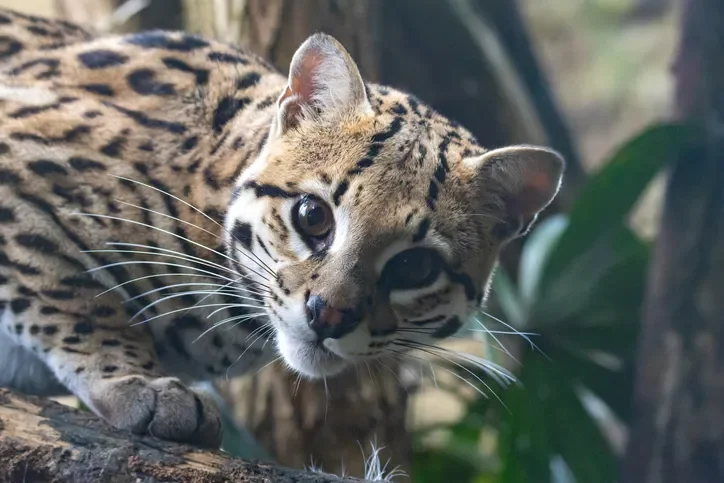 [/td]
[td]
[/td]
[td]
How would you rate today’s newsletter?
[/td]
OP
OP
- Joined
- Feb 9, 2025
- Messages
- 6,641
Online
|
OP
OP
- Joined
- Feb 9, 2025
- Messages
- 6,641
Online
| |
| Cheetahs can’t roar. | |
| By Michael Nordine | |
| Though we tend to lump cheetahs in with lions, tigers, and other “big cats,” they actually belong to a different genus altogether. There are five extant species in the Panthera genus — jaguars, leopards, lions, snow leopards, and tigers — whereas cheetahs are the only living members of the Acinonyx genus. One of the biggest differences between cheetahs and those other big cats is that cheetahs have a fully hardened hyoid bone, rendering them unable to roar. Housecats have a similar anatomy, hence why cheetahs produce meowlike sounds that are closer to those of your tabby than of a tiger. And also unlike big cats, cheetahs even purr. Though this may make them seem less fierce, it also makes them cuter — an even tradeoff, as far as we’re concerned. | |

| Mammals |
[td] [/td]
[td] [/td]
Users who are viewing this thread
Total: 4 (members: 1, guests: 3)
Online statistics
- Members online
- 4
- Guests online
- 163
- Total visitors
- 167
- Robots
- 310
Totals may include hidden visitors.
Trending content
-
 Thread 'Music Game - Keep a word, drop a word from the song title or artist name'
- gopher_byrd
Replies: 3K -

-
-

-


