Welcome!
By registering with us, you'll be able to discuss, share and private message with other members of our community.
SignUp Now!You are using an out of date browser. It may not display this or other websites correctly.
You should upgrade or use an alternative browser.
You should upgrade or use an alternative browser.
Fun Facts
- Thread starter Jimi
- Start date
-
Nobody is reading this thread right now.
More options
Who Replied?
OP
OP

- Joined
- Feb 9, 2025
- Messages
- 2,343
Offline
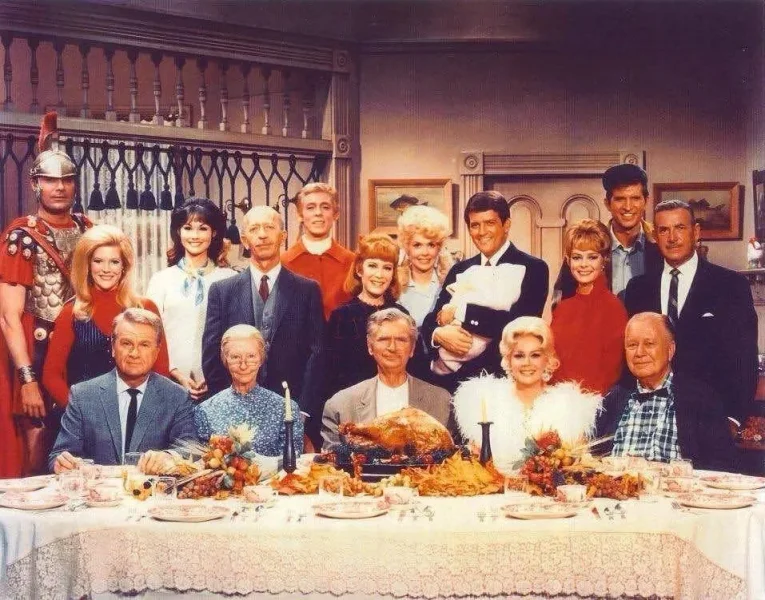
CBS, in 1971, cancelled every show with a tree in it and replaced them
with shows like All In The Family. The reason the shows were cancelled is while they still got good ratings in the boonies, their ratings plummeted in New York and LA.
with shows like All In The Family. The reason the shows were cancelled is while they still got good ratings in the boonies, their ratings plummeted in New York and LA.


OP
OP
- Joined
- Feb 9, 2025
- Messages
- 2,343
Offline
[td]
[/td]
[td]
[/td]
[td]
Your science fact of the dayHermit crabs are adapted for life in and out of the water, and they have unique gills to facilitate this. More specifically, they have reduced gills and moist gill chambers with highly vascularized areas that are capable of gas exchange.Keep Learningimage source: nationalzoo.si.eduHow would you rate today’s newsletter?
The Daily Atom1770 Massachusetts Ave #268Cambridge, MA 02140Not interested in receiving future emails from The Daily Atom?Unsubscribe here
[/td]
Your science fact of the dayHermit crabs are adapted for life in and out of the water, and they have unique gills to facilitate this. More specifically, they have reduced gills and moist gill chambers with highly vascularized areas that are capable of gas exchange.Keep Learningimage source: nationalzoo.si.eduHow would you rate today’s newsletter?
The Daily Atom1770 Massachusetts Ave #268Cambridge, MA 02140Not interested in receiving future emails from The Daily Atom?Unsubscribe here
OP
OP
- Joined
- Feb 9, 2025
- Messages
- 2,343
Offline
| |
| Cats basically only meow at humans. | |
| By Bennett Kleinman | |
| While many humans communicate with one another through chit-chat or emoji-filled texts, cats primarily interact with fellow felines through scent or touch. But when a cat wants to convey a message to its human (e.g., “Where is my dinner?!”), they may meow for attention. However, as common as it is for cats to meow at humans, they rarely meow at other members of their own species. That isn’t to say cats never meow at other cats; newborn kittens may meow at their mothers to express hunger or other discomfort. But as cats get older, they realize physical touch and chemical pheromones are most effective for communicating with other cats. They tend to save all that meowing for us humans, as we’re less adept at picking up their physical and olfactory cues. | |

| Mammals |
[td]
 [/td]
[/td]
[td] [/td]
[/td]
OP
OP
- Joined
- Feb 9, 2025
- Messages
- 2,343
Offline
[td] Original photo by ju_see/ Shutterstock |

October was originally the eighth month. | |
| Octagon, octopus … most words that begin with the Latin prefix “Oct” have some connection to the number eight. The same used to be true of October. While the modern calendar considers the autumn month to be the 10th of the year, it wasn’t always that way. It also hasn’t always been called October. | |
[td]
|
OP
OP
- Joined
- Feb 9, 2025
- Messages
- 2,343
Offline

OP
OP
- Joined
- Feb 9, 2025
- Messages
- 2,343
Offline
=AZgRJ0j7Sff2DUs40lSftIh1aNvK8usaX3qGvXnc37vtyQxryrrBiOzCMvjayMtSnYRmrpfN_lKvDEeRXn2Z08M2UTh-3W711pffmaTC4b4Bb9Fr88-6ifk3w2oeOmCVkzcx9KCqMYL_6ryo1Guh8sJQOVtFDKq1BKSV3uBzrCZHt6_B76SRzcCLQige8p8MN7kKC17vfONHI6XICgiLp5UGjhC7RZ-2YNwLJNJ0nPrp2Pa80ZfUjvqQ_yD49rcy0Hr7fkiPN3CGbx_cbS8Ba6VOwtf1VGZHhSYaxeMwdS0Z3GGOy96VMTiG&__tn__=H-R']
OP
OP
- Joined
- Feb 9, 2025
- Messages
- 2,343
Offline
The Virginia opossum is one of the few animals in North America that routinely eats venomous snakes and survives the bites. A protein in its blood called von Willebrand factor has mutated at the exact site where pit viper venom normally attaches, giving the opossum roughly a hundredfold increase in resistance over any other mammal its size.
In 1977, researchers injected opossums with 60 times the dose of rattlesnake venom known to kill a dog of similar weight. They monitored them for 30 days. Nothing happened.
Published prey records for the Virginia opossum include copperheads, cottonmouths, timber rattlesnakes, eastern diamondbacks, western diamondbacks, watersnakes, racers, milk snakes, ring-necked snakes, garter snakes, and brownsnakes. A 1954 Texas diet study found copperheads alone made up about 6 percent of opossum prey. A 1950 New York study found snakes of all species made up 19 percent.
The opossum grabs whatever part of the snake it reaches first and starts chewing right away.
The 2026 Edwards and Balchan paper documented an opossum spending 20 minutes working on a snake from the tail end without ever moving toward the head. It does not need to be careful about which end it starts with because the venom cannot hurt it. A copperhead biting an opossum on the face while being eaten alive is delivering a weapon that the opossum's blood neutralizes before it reaches any organ.
This happens every night across the eastern and central United States, wherever brush, cover, and water meet, and nobody sees it because the opossum is nocturnal. The animal's body temperature runs 94 to 97 degrees, low enough that rabies rarely takes hold because the virus struggles to replicate in a cool host. It has 50 teeth, more than any other North American land mammal, arranged in a jaw built to grip struggling prey and not let go.
The widely repeated claim that a single opossum eats 5,000 ticks per season came from a 2009 Cary Institute study that extrapolated from laboratory grooming trials, and subsequent field research has not confirmed the number.
An opossum living under a porch, a deck, or a crawl space is patrolling the property between midnight and dawn, eating the snakes it encounters along the foundation, the garden edges, and the gaps where the lawn meets the brush.
Image is for illustration purposes only
Source: Werner and Vick (1977), Toxicon / Jansa and Voss (2011), PLOS ONE / Edwards and Balchan (2026), Reptiles and Amphibians / Hamilton (1950) / Wood (1954) / Cary Institute of Ecosystem Studies.

In 1977, researchers injected opossums with 60 times the dose of rattlesnake venom known to kill a dog of similar weight. They monitored them for 30 days. Nothing happened.
Published prey records for the Virginia opossum include copperheads, cottonmouths, timber rattlesnakes, eastern diamondbacks, western diamondbacks, watersnakes, racers, milk snakes, ring-necked snakes, garter snakes, and brownsnakes. A 1954 Texas diet study found copperheads alone made up about 6 percent of opossum prey. A 1950 New York study found snakes of all species made up 19 percent.
The opossum grabs whatever part of the snake it reaches first and starts chewing right away.
The 2026 Edwards and Balchan paper documented an opossum spending 20 minutes working on a snake from the tail end without ever moving toward the head. It does not need to be careful about which end it starts with because the venom cannot hurt it. A copperhead biting an opossum on the face while being eaten alive is delivering a weapon that the opossum's blood neutralizes before it reaches any organ.
This happens every night across the eastern and central United States, wherever brush, cover, and water meet, and nobody sees it because the opossum is nocturnal. The animal's body temperature runs 94 to 97 degrees, low enough that rabies rarely takes hold because the virus struggles to replicate in a cool host. It has 50 teeth, more than any other North American land mammal, arranged in a jaw built to grip struggling prey and not let go.
The widely repeated claim that a single opossum eats 5,000 ticks per season came from a 2009 Cary Institute study that extrapolated from laboratory grooming trials, and subsequent field research has not confirmed the number.
An opossum living under a porch, a deck, or a crawl space is patrolling the property between midnight and dawn, eating the snakes it encounters along the foundation, the garden edges, and the gaps where the lawn meets the brush.
Image is for illustration purposes only
Source: Werner and Vick (1977), Toxicon / Jansa and Voss (2011), PLOS ONE / Edwards and Balchan (2026), Reptiles and Amphibians / Hamilton (1950) / Wood (1954) / Cary Institute of Ecosystem Studies.


OP
OP
- Joined
- Feb 9, 2025
- Messages
- 2,343
Offline
| |
| Fleas accelerate faster than a launching space shuttle. | |
| By Bennett Kleinman | |
| When a space shuttle launches from Cape Canaveral, its acceleration often maxes out around three Gs, aka three times the force of gravity. But when a flea launches itself off the ground and onto a dog’s back, the tiny pest accelerates at up to 100 Gs, dwarfing our humanmade rockets by comparison. Fleas achieve such incredible acceleration speeds thanks to an elasticlike protein called resilin, located in pads atop their hind legs. As fleas prepare to jump, they contract their muscles, which causes energy to build up in that resilin, not unlike how someone in a sci-fi movie may charge a laser gun before firing. The fleas then push their legs outward, releasing all the stored energy and propelling it into the air with extreme force at distances of up to 50 times the insect’s body length — not quite all the way to outer space, but impressive nonetheless. | |

| Insects |
[td]
 [/td]
[/td]
[td] [/td]
[/td]
OP
OP
- Joined
- Feb 9, 2025
- Messages
- 2,343
Offline
[td] Original photo by Dawn McDonald/ Unsplash |

Gas stations make more money from convenience items than from selling gas. | |
| In much the same way that movie theaters make higher profits from concessions than they do from tickets, gas stations make more money from convenience items than they do from selling gas. The profit margins on gasoline are extremely (and surprisingly) low, so much so that filling stations barely make any money just from selling fuel. That’s even true when gas prices are higher. Here’s why. | |
[td]
|
OP
OP
- Joined
- Feb 9, 2025
- Messages
- 2,343
Offline

| |
[td] |
OP
OP
- Joined
- Feb 9, 2025
- Messages
- 2,343
Offline
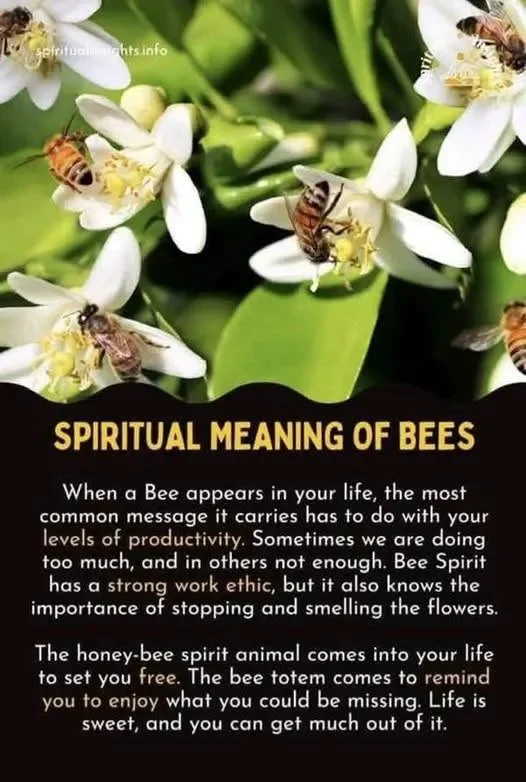
If you’re a bumblebee, this is your to-do list for October


 October is the last month to see bumblebees as nests come to their natural end.
 Towards the end of a nest, males appear. They feed on nectar and try to mate with queens from other nests.
 Once mated, new queens feed on pollen and nectar, storing energy as fat to survive their long winter hibernation.
 Old queens and their nests will naturally come to an end as summer turns into autumn.
 Only the new queens survive until the following spring by hibernating underground.
Hands up if you’ve seen a bumblebee recently?

Hands up if you’ve seen a bumblebee recently?
Users who are viewing this thread
Total: 1 (members: 0, guests: 1)
Happy New Year!!!

Online statistics
- Members online
- 2
- Guests online
- 35
- Total visitors
- 37
- Robots
- 226
Totals may include hidden visitors.
Trending content
-
 Thread 'Music Game - Keep a word, drop a word from the song title or artist name'
- gopher_byrd
Replies: 1K -

-
-

-


