Welcome!

By registering with us, you'll be able to discuss, share and private message with other members of our community.

SignUp Now!

Our Health

Hi Jimi,


At 37, Nick Pineault considered himself fairly healthy.


He had low body fat.


He was an amateur athlete.


He ate organic food.


He took quality supplements.


Nothing about him screamed, “This person has a serious toxic burden.”


Sure, he had some brain fog…


Digestive issues and ongoing acne….


But like so many people, he had simply learned to live with them.


Then Nick did something that changed the way he looked at his health.


As a citizen journalist investigating environmental medicine, he decided to test his own body for heavy metals.


The results stopped him in his tracks.


His lead level came back at 34 times the reference range.


His mercury was 29 times the reference range.


And according to the doctors who reviewed his results, his lead levels were comparable to levels seen in people with significant occupational exposure.


Nick had never worked as a welder.


Three different doctors confirmed the results.


He had gone looking for answers about environmental illness in other people.


Instead, he discovered something hiding in his own body.


And that raised a question I think all of us should consider:


How much can be going on inside your body that you simply can't see?


Because looking healthy on the outside doesn't necessarily tell you what's happening on the inside.


Nick decided to find out what could be done.


What followed was a year-long investigation and personal experiment—including time at an environmental medicine clinic and months of following the protocols he had been researching.


And over that period, he reported meaningful changes in his:


  • Mental clarity
  • Motivation
  • Mood
  • Energy and overall wellbeing
His experience became the foundation for a 61-minute documentary:


Body Burden: The Toxins We Carry


This isn't simply a documentary about toxins…


It's an investigation into environmental medicine, the practitioners who've been working in this field for decades, and what happened when the journalist became the patient.


Inside, you'll see:


  • Environmental medicine practitioners with decades of experience

  • Patient stories involving environmental and unexplained health problems

  • Testing that revealed unexpected toxic exposures

  • Nick's own results and year-long journey

  • The approaches he investigated for reducing exposure and supporting the body's natural elimination processes


Sometimes the most important health problems aren't the ones you can see.


And sometimes, the first step toward understanding what's really going on is knowing what to look for.


→ Watch Nick's journey and discover what may be hiding beneath the surface


Body Burden is available with complimentary access May 25–June 1.

To your health,
 
[td]
[td]
Hey ,


Something unusual has been happening with cancer.


For decades, we've largely thought of cancer as a disease that comes with age.


And age is still one of the biggest risk factors.


But researchers have been documenting an increase in cancers among younger adults.


A major National Cancer Institute analysis found that rates of 14 different cancers increased in people under 50 between 2010 and 2019.


Why? Researchers are still trying to figure that out.


Is it diet?


Obesity and metabolic health?


Changes in the gut microbiome?


Environmental exposures?


Lifestyle?


The truth is, there are numerous factors that contribute to cancer - for some, it may be all of the above.


In fact, I was diagnosed with skin cancer 7 years ago.


The contributing factors?


It wasn’t the sun. My sun habits never changed before, during, or after.


It was a result of multiple infections: mold, MARCoNS, and COV!D


On top of that, my sleep was horrendous for almost a year due to having a new-born at the same time which severely impacted my ability to heal.


Fortunately, I had the knowledge to address the underlying factors which allowed me to recover from cancer without any medical intervention.


My friend Chris Wark’s cancer diagnosis was worse.


He faced stage III colon cancer at just 26 years old.


After surgery, he was told he needed 9-12 months of chemo and that he had a 60% chance of living 5 years, barely better odds than a coin toss.


Instead, he chose a different path, radically changed his diet and lifestyle, and began researching how others had survived cancer against the odds.


More than 20 years later, he's healthy and cancer-free.


Chris’s desire to find answers led him to do more than two decades of research and he organized what he learned into a 10-part holistic prevention and healing program called:

​
[/td]​
[td]
mail
[/td]​
[td]
This is normally a paid program, but he’s putting the entire course online for FREE for 10 days this month.


If you are serious about prevention, this is worth watching.


Register for complimentary access to SQUARE ONE.


Wishing you abundant health,


Jason Prall


P.S. Chris's diagnosis happened more than 20 years ago. Mine was 7 years ago.


But today, researchers are paying increasing attention to why certain cancers are appearing more often in younger adults.


What Chris teaches in his program is more important now than ever.


Watch the trailer here​
[/td]​
[/td]​
 

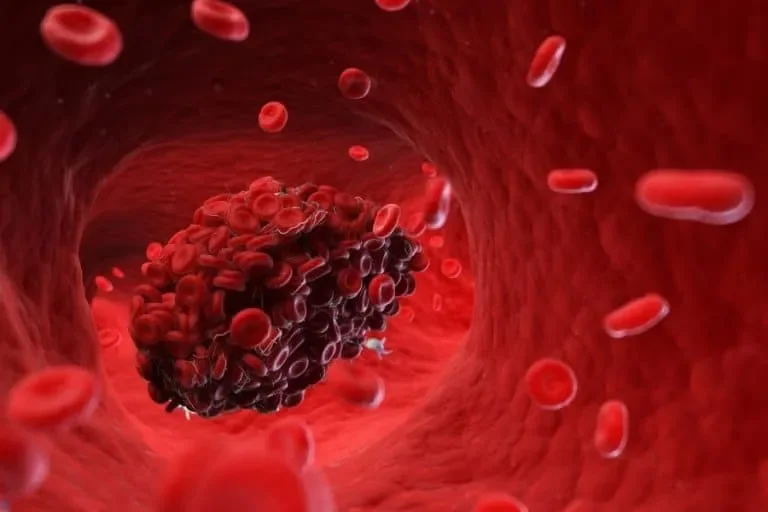
Silent Signs Of A Blood Clot You Should Not Ignore​

reqid=7143f3b7-75af-585d-1c44-e2004601cf00&sig=QbU.webp
Blood clots can be deadly, yet their earliest warning signs are so easy to dismiss that most people never act in time. This article reveals the quiet signals your body sends, and why recognizing them could save your life.

 
[td width="560px"]
Hi Jimi,

Losing a tooth is never just a cosmetic problem.

It changes how you chew, how you digest, and what happens inside your jawbone long after the tooth is gone.

And if you’ve been told you need an implant, bridge, denture or extraction, your next dental decision will matter more than you can imagine.

In Episode 8 of the Dental Health Docu-Class - now live for 24 hours - Leonard Fazio, DDS, reveals what most people are never told before a tooth comes out:
​
[/td]​
 
High-intensity workouts get all the hype, but what if slowing down is the smarter move? Zone Zero exercise keeps your heart rate low and steady, using easy movements like slow walks, stretching, and standing more throughout the day. It's accessible to almost anyone, easy on your body, and may support steady energy, blood sugar balance, and recovery - no gym, no gasping for air.


Read the full guide here → Zone Zero Exercise: The Game-Changing Workout Trend Everyone’s Missing Out On


Move gently, live well,
 
[td][/td]​
[td]
Episode 496: DEADLY HOSPITAL PROTOCOLS, MAHA MUTINY & THE MAMMOGRAM MYTH​
[/td]​
[td]
Today on THE DOWNLOAD!

Russian plague?
Reports of one death and quarantines have U.S. officials seeking answers, including whether a lab accident could be involved.

Then, Fauci’s newly public notes suggest his focus was less on whether the Ebola experiments could cause harm and more on preventing the public from losing faith in vaccines.

Plus, the science behind a few simple daily changes that could have a powerful impact on your focus, health, and quality of life.

Watch THE DOWNLOAD LIVE TODAY at 5 PM PT / 8 PM ET at thehighwire.com! ​
[/td]​
 
[td]
​
[/td]​
[td]

Nature’s Original Peptide: The Forgotten Aging Study That Cleared Cataracts in a Month​

​
[/td]​
While Washington debates injectable peptides, a peer-reviewed aging study showed that a humble sprouting grass could do what a thymus graft does, and almost no one followed up.
[td]
READ ARTICLE

[td]
Image
[/td]​
[/td]​
 

The Most Common Forms Of Cancer​

Fwp-content%2Fuploads%2F2023%2F01%2Fcancer-768x512.webp
Cancer is not one single disease, and knowing the difference between its most common forms could be the thing that changes your health story. Dive into this guide to find out what each type involves and what you can do about it.

 
[td]


[/td]​
[td]

Best Kept Secrets to Prevent, Halt, or Even Reverse Macular Degeneration​

​
[/td]​
Have you ever felt your money was wasted on supplements? That even though you consistently followed the protocol from your health-care practitioner you were not getting the results others obtained with the same program? You may have been right! We've helped hundreds of patients with age-related macular degeneration (ARMD) with these healing secrets designed to help "non-responders"; those for whom the average supplement and dietary protocol fails to work.
[td][/td]​
 
Does any of this sound like you?

You're wired and exhausted at once: awake at 3am, jaw clenched, never quite off. Or you're flat, foggy, and heavy, and rest doesn't restore you. Or you swing between the two, and neither one feels like yours.

And often it shows up in your health, too: digestion that stopped being predictable, fatigue and brain fog that no protocol has fully reached, flares that follow a hard week more reliably than anything you ate.

It shows up in your days as well: snapping at the people closest to you, shutting down when things get hard, needing something to get you through the evening.

A lot of people live like this for years and assume it's just how they are now. It usually isn't. It's actually a nervous system that's stuck.

Dysregulation runs in two directions.
A nervous system can get stuck in activation: wired, anxious, braced. Or it can get stuck in shutdown: numb, foggy, exhausted.

They feel like opposites, but they're both protective states. In both, your body moves repair, digestion, and restorative sleep further down the list.

That's also why one-size-fits-all advice misses the mark. What helps an activated nervous system can worsen a shut-down one. Knowing which state you're in changes how you approach it, and helps you make progress much more easily and effectively.

That's what I'll be teaching in a free live workshop for our community.

The Language of Your Nervous System
🗓 Tuesday, October 13 — 7pm ET / 4pm PT
📍 Live online

[Save My Spot]

What you'll walk away with:

  • The ability to tell which direction your nervous system tends to go, by reading the signals it runs on in daily life: breath, tension, sleep, digestion, speed of thought.
  • An understanding of the foundation under everything else you've tried, and why the work you're already doing needs it.
  • Knowing whether your nervous system needs bringing down or gently waking up, because capacity matters more than calm.
  • A starting point for reading your own system, not a generic description of someone else's, because no two nervous systems are the same.
I've spent my career on both "sides" of healing. Nearly 20 years in fitness, nutrition, and natural health, including a decade at Rebel Health, and alongside that, I went deep into nervous system physiology, somatic therapy, meditation, and breathwork, with thousands of hours of professional training and client sessions.

The workshop is mostly teaching, with a short look at my upcoming six-week program at the end. You'll leave understanding your body better either way.

If you're tired in a way that rest doesn't touch, this one's for you.

[Register Here]
 
[td]
Hey Jimi,

What if the simplest thing you could do for your gut today was to eat a sweet snack?

It sounds too easy.

But in a small study, six subjects were given a daily serving of one sweet snack in freeze-dried form, equivalent to two fresh servings, for four days.

Researchers collected stool samples before, during, and after the four-day period, then measured the bacteria present.

Beneficial bifidobacteria increased.

That matters because bifidobacteria are some of the beneficial microbes you want to hold onto as you age – helping keep inflammation down while supporting a sharper mind, healthier metabolism, and stronger bones.

That is a surprisingly short intervention for a measurable shift in the gut. And the food used in the study is genuinely enjoyable to eat.

So what is this tasty snack?

And how does it boost beneficial, age-protective bacteria?

You’ll find out on page 88 of Goodness Lover’s brand-new free eBook:

30 Everyday Foods That Cool “Inflammaging” — The Hidden Aging Accelerator Behind Stiff Joints, Fatigue & Brain Fog

⇒ Get your free copy here.
[td width="40px"]
mail
[/td]​
[td width="40px"]
mail
[/td]​
[/td]​
[td]
mail
[/td]​
[td]
[td]
​
[td width="40px"]
mail
[/td]​
​
[/td]
[td width="40px"]
mail
[/td]​
[/td]​
[td]
mail
[/td]​
[td]
mail
[/td]​
[td]
Inside, you’ll also discover:

→ The ordinary food linked to a 64% lower risk of breast cancer, and the cooking detail that makes its compounds easier to absorb

→ The purple drink that improved memory and word recall in older adults in just 3 months, while also reducing symptoms of depression

→ The breakfast staple that reduces cholesterol by 5-10%, with improvements visible within just a few weeks

⇒ Download your free copy of 30 Everyday Foods That Cool “Inflammaging” here.

To a healthier gut and calming chronic inflammation,

Kim

P.S. The study was small, but the result was specific: this sweet snack changed the gut’s microbial makeup and increased beneficial bifidobacteria. Find out which snack it was on page 88.

⇒ Get your free copy here.
[td width="40px"]
mail
[/td]​
[td width="40px"]
mail
[/td]​
[/td]​
[td]
mail
[/td]​
 
Hi Jimi,


What happens inside your gut as you get older?


The answer may be far more important than you realize.


Researchers are finding that aging can bring a series of changes to the gut ecosystem, including:


  • Lower levels of beneficial short-chain fatty acids.
  • Altered bile-acid metabolism.
  • Higher levels of inflammatory signals.
  • Changes to the gut barrier.


And potentially, something even more concerning…


Microbial products crossing into the bloodstream.
[td]
What happens inside your gut as you get older​
[/td]​
In other words, your gut isn't simply sitting there getting older.

Its entire ecosystem can change.


And those changes may have consequences far beyond digestion…


Affecting inflammation, immunity, metabolism, brain health and how well you function as you age.


But here's the fascinating part:


Researchers are also studying what looks different inside the guts of people who age exceptionally well.


So what are they finding?


And is it possible to influence the ecosystem inside your gut as you get older?


That's what you'll discover in The Gut-Aging Solution, a brand-new 8-part docuseries featuring 21 leading doctors, researchers and longevity experts.


You can watch it complimentary from October 26th–November 2nd.


Discover the gut secrets of healthy aging →


Because aging may begin somewhere you never thought to look.

To your health,
 
[td]
[td]
mail
[/td]​
[td]
[td width="40px"]
mail
[/td][td width="40px"]
mail
[/td]​
[/td]​
[td]

Hi there!Want to get rid of your sore throat in record time?Let’s make an herbal sore throat spray together on Thursday! 💨Herbalist Sorrel Hartford and I will be demonstrating from our kitchens at noon Pacific time.We hope you can spend your lunch hour with us.We’ll make a sore throat spay using echinacea, elderberries, sage, ginger, and licorice as well as a cough syrup with elderberries, elecampane and plantain. 👩‍🍳
[td width="40px"]
mail
[/td]​
[td width="40px"]
mail
[/td]​
[/td]​
[td]
mail
[/td]​
[td]
[td width="40px"]
mail
[/td][td width="40px"]
mail
[/td]​
[/td]​
[td]
mail
[/td]​
[td]

Reserve your spot for the live event!
[td width="40px"]
mail
[/td]​
[td width="40px"]
mail
[/td]​
[/td]​
[td]
mail
[/td]​
[td]

You can follow along with the recipes in this free ebook: 7 of our Very Best Herbal Cold Care Recipes. In this event:We'll walk through the recipes step by step, so you can follow along at home if you wantWe'll talk about why this remedy works – not just how to make itYou can ask us your winter wellness questions in real timeWe'll share how this recipe fits into the bigger picture of our beloved course Herbal Cold Care: Natural Remedies for Cold & Flu Season (on sale this week for only $47!)If you've been wanting more practical home herbalism but haven't known where to begin, this is exactly where to start. Colds and flu are something we all face, and the results can be immediate. There's nothing like watching someone actually make a remedy to make it feel possible!
[td width="40px"]
mail
[/td]​
[td width="40px"]
mail
[/td]​
[/td]​
[td]

Join us live - register here ➡️
[td width="40px"]
mail
[/td]​
[td width="40px"]
mail
[/td]​
[/td]​
[td]
mail
[/td]​
[td]

See you in the kitchen!Warmly,Kimberly GallagherLearningHerbsPS...If you’re ready to dive into Herbal Cold Care: Natural Remedies for Cold and Flu Season, you can get the $47.00 sale price right here. During the live, we’ll give you a link to download the Winter Wellness chart that this course is built around. It’s an invaluable tool for choosing the right remedy for your cold or flu.
[td width="40px"]
mail
[/td]​
[td width="40px"]
mail
[/td]​
[/td]​
[td]
mail
[/td]​
[/td]​
 
[td]
[td]
[td]
​
[/td]​
[/td]​
[/td]​
[td]
[td]
[td]
Hi Jimi,

Here's something I find endlessly fascinating about the gut microbiome: it's not just what you eat that matters. It's what your bacteria do with it after you eat it.

A new research review on mulberry just illustrated this beautifully.

Mulberry leaves and fruit contain polyphenols and polysaccharides, compounds that your gut bacteria can ferment into short-chain fatty acids like butyrate, propionate, and acetate. These are some of the most protective molecules your gut produces. They support your intestinal lining, influence how your body handles blood sugar and fat, and help maintain the chemical conversation between your gut and the rest of your body.

So far, so good.

But here's where it gets interesting.

When researchers tested mulberry's polyphenols and polysaccharides separately in mice on a high-fat diet, each had some effect. But when they gave the mice both compounds together, as they naturally occur in the whole fruit, the results were significantly better. More favourable shifts in gut bacteria. Greater improvements in metabolic markers. Better intestinal health.

The whole was genuinely greater than the sum of its parts.

They then took the gut bacteria from the mice that received the combined fraction and transplanted them into other animals. The recipient mice showed metabolic improvements too, even though they'd never consumed any mulberry themselves.

The benefits weren't just in the plant. They were in what the microbiome had become.

Most of this research is still in animals and lab settings, and the researchers are upfront about that. We can't assume it will all translate directly to people.

But honestly, the principle it reinforces is one that keeps showing up in study after study: your food provides the raw materials, your gut bacteria build the medicine.


Yours for better health, naturally,​
[/td]​
[/td]​
[/td]​
 
[td]
[td]
[td]
Hey there,

In a culture that celebrates hustle, pushing harder often feels like the answer to everything. More miles. More reps. More workouts. More effort. But when it comes to fitness, there's a surprising truth that sports scientists have known for decades. You don't get stronger during exercise. You get stronger after it.


The workout is only half of the equation. Recovery is where the magic happens.


That's why rest days aren't a sign of weakness, laziness, or lack of commitment. They're a crucial part of the training process. In fact, if you skip them for too long, you may actually slow your progress rather than speed it up. So what exactly happens during recovery? And why does your body need time off to become fitter, stronger, and healthier?


Let's dig into the science.


Exercise Breaks You Down In a Good Way


Every workout creates stress.


When you lift weights, you create tiny amounts of damage within muscle fibers. When you run, cycle, or swim, you challenge your cardiovascular system and energy stores. Even a brisk walk demands something from your body.


This sounds negative, but it's actually the point.


Exercise is a controlled stressor. Your body responds by adapting so it can better handle that stress in the future. Scientists call this process adaptation. The catch? Adaptation doesn't happen during the workout itself. Instead, it occurs during the recovery period afterward. Research on training and recovery consistently shows that increased training loads only improve performance when they are balanced with adequate rest. Without recovery, the body struggles to complete the repair and adaptation process.


Think of exercise as sending your body a message, and that message is, "This challenge is important. Be ready for it next time." Recovery is when your body reads and responds to that message.


The Supercompensation Effect


Sports scientists often talk about a concept called "supercompensation."


The idea is simple. After a tough workout, your performance temporarily drops because you're tired. During recovery, your body repairs itself and restores depleted resources. Given enough time, it doesn't just return to baseline; your body often rebounds slightly above it.


That rebound is where improvement happens. Stronger muscles. Better endurance. Faster recovery. Improved fitness. Researchers describe this as a normal and beneficial part of training. Short periods of hard training followed by sufficient recovery can produce significant gains in performance.


Miss the recovery phase, however, and the cycle breaks down.


What Happens During a Rest Day?


A rest day may look uneventful from the outside, but your body is busy behind the scenes.


During recovery, several important processes take place:

  • Muscle fibers repair and rebuild
  • Glycogen stores (your body's stored carbohydrate fuel) are replenished
  • Hormones involved in growth and repair do their work
  • The nervous system recovers from physical and mental stress
  • Inflammation from training begins to settle
  • Connective tissues such as tendons and ligaments get time to recover
In other words, rest days are maintenance days. Without them, small problems can accumulate into bigger ones.


When Hard Work Becomes Too Much


Many athletes intentionally train hard enough to create temporary fatigue. This is sometimes called "overreaching."


Done correctly, overreaching is productive. You train hard, performance dips briefly, then rebounds after recovery. But there's a limit. When training stress continually exceeds recovery capacity, problems emerge. Researchers refer to this as non-functional overreaching or, in more severe cases, overtraining syndrome. Symptoms can include persistent fatigue, declining performance, mood disturbances, sleep disruption, and increased illness risk. Recovery can take weeks or even months.


The key point is that overtraining isn't simply about exercising a lot. It's about an imbalance between stress and recovery. A hard training block with adequate rest is productive. A moderate training load with poor sleep, chronic stress, and insufficient recovery can still become a problem.


Signs You Might Need More Recovery


Your body usually provides warning signs before serious problems develop. Watch for:

  • Persistent soreness that doesn't improve
  • Declining workout performance
  • Unusual fatigue
  • Poor sleep quality
  • Loss of motivation to train
  • Increased irritability
  • Elevated resting heart rate
  • Frequent colds or infections
  • Nagging aches and injuries
These signs don't automatically mean you're overtrained. Often they simply indicate that recovery needs more attention.


Many coaches and sports scientists now encourage athletes to pay attention to subjective measures like how they actually feel, rather than relying exclusively on technology and metrics. Interestingly, psychological signs often appear before physiological ones.


Rest Doesn't Always Mean Doing Nothing


Here's another misconception. A rest day doesn't have to involve lying on the sofa all day. Sometimes active recovery can be helpful. Active recovery refers to low-intensity movement such as:

  • Walking
  • Gentle cycling
  • Easy swimming
  • Mobility work
  • Yoga
  • Light stretching
Research suggests active recovery may improve blood flow, reduce stiffness, and help reduce muscle soreness. The important word is "easy." A recovery session shouldn't feel like another workout. If you're breathing hard, chasing personal bests, or feeling exhausted afterward, it's probably no longer recovery.


Recovery Is More Than Rest Days


True recovery extends beyond simply skipping a workout. Three factors play an especially important role:


1) Sleep


Sleep is arguably the most powerful recovery tool available.


During sleep, the body performs many of its repair processes, supports immune function, and consolidates learning and motor skills. Sports performance experts increasingly recognize poor sleep as one of the biggest barriers to effective recovery.


2) Nutrition


Your body needs raw materials to rebuild itself.


Adequate protein supports muscle repair. Carbohydrates help replenish energy stores. Sufficient overall calorie intake helps prevent the energy deficits associated with fatigue and underperformance.


3) Stress Management


Your body doesn't distinguish perfectly between training stress and life stress.


Work deadlines, financial worries, relationship problems, and lack of sleep all draw from the same recovery resources. A challenging week at work may mean your body needs more recovery from exercise, too.


The Key Takeaways


The best training plans don't just include workouts. They include recovery. Rest days aren't interruptions to progress; they are progress.


Every adaptation you're hoping to achieve, whether it's building muscle, improving endurance, or simply staying healthy, depends on giving your body time to respond to the challenge you've created. So if you've been feeling guilty about taking a day off, consider this your permission slip from sports science.


Train hard. Recover seriously. And remember, the goal isn't to see how much work you can survive. The goal is to create a cycle of stress and recovery that your body can adapt to for years.


Practical Takeaways


This week, try these simple recovery habits:

  • Schedule at least one full rest day each week
  • Prioritize 7 to 9 hours of sleep per night
  • Include easy walks or gentle movement on recovery days
  • Eat enough protein and overall calories to support your training
  • Pay attention to fatigue, mood, and motivation, not just performance metrics
  • If performance is declining for several weeks, consider reducing training volume temporarily
  • Treat recovery as part of your training plan, not an optional extra
Your body grows stronger between workouts. Give it the chance.​
[/td]​
[/td]​
[/td]​
[td]
[td]
[td]
Yours in good health,​
[/td]​
[/td]​
[/td]​
 
What most people (and most doctors) believe is “just aging, Jimi, might be something very different.


Some doctors and researchers are looking at it differently.


What if you could learn how to:


  • Calm the silent fire of inflammaging that drives fatigue, stiff joints, brain fog, and chronic “age-related” diseases
  • Rebuild the age-protective bacteria that fade as your gut gets older (they matter more than any single “anti-aging” supplement)
  • Protect your brain, heart, bones, and joints all at once by caring for the one system most doctors overlook
  • Enjoy steadier energy through the day, sharper recall, and more freedom to live on your own terms
  • Stay independent, active, and in control of your own health – for as many good years as possible


Do you refuse to believe it’s “just aging?”
 

Users who are viewing this thread

    Happy New Year!!!
    christmas-tree
    Back
    Top