Welcome!

By registering with us, you'll be able to discuss, share and private message with other members of our community.

SignUp Now!

Fun Facts

World History​

[td]

Gardeners used to weed grass to make room for dandelions.​

​
[/td]​
[td]
​
[/td]​
Dandelions weren’t always the bane of lawn care. A little more than a century ago, the unmistakable yellow flowers were even commonly grown on purpose. In the 19th and early 20th centuries, when fresh produce was more dependent on seasons, dandelions were put to good use, and the plant was purposefully cultivated. But after World War II, that changed.
​
[/td]
 

World History​

[td]

Why Do Old Churches Face East?​

​
[/td]​
[td]
​
[/td]​
By the late second century CE, Christians were already known for praying while facing east — a practice that influenced how churches were designed and, in many cases, which direction they faced.
mail.webp
 
May be an image of collard greens and text
 

World History​

[td]

Why Did People Wear Sleeping Caps?​

​
[/td]​
[td]
​
[/td]​
Nightcaps show up so often in early modern portraits and literature that they can feel like a quaint cliché. But these small garments had a surprisingly large job.
mail.webp
 
[td]
[td]
​
[/td]​
[td]
Your science fact of the day​
[/td]​
[td]
Despite their densely furred bodies, Long-Tailed Chinchillas don’t have furry feet — instead, the soles of their feet have fleshly foot pads known as pallipes. They also have very maneuverable toes to help with grasping, climbing, and jumping in their native habitat of the Andes Mountains. Sadly, these creatures are currently classified as Endangered.​
[/td]​
[td]
[td][/td]​
[/td]​
[td]
image source: nationalzoo.si.edu​
[/td]​
[td width="100%"]
mail
[/td]​
[td]
[td]
How would you rate today’s newsletter?​
[/td]​
[/td]​
[/td]​
 
[td]
Fact of the Day​
​
A house cat’s DNA is more than 95% tiger.
By Michael Nordine
In news that may surprise cat owners but certainly won’t be unexpected to cats themselves, who hold justifiably high opinions of themselves, our feline friends share 95.6% of their DNA with tigers. This discovery was first made in 2013, when geneticists sequenced the genomes of tigers, lions, and snow leopards.

Their research also found that tigers and what are now house cats first diverged some 10.8 million years ago, which isn’t especially long in evolutionary terms. The amount of shared DNA is the same percentage across all breeds, meaning your orange boy isn’t any more tiger than the calico down the street.
Mammals
[td]
mail.webp​
[/td]​
[/td]
[td]
​
[/td]​
​
[/td]
 
​

U.S. History​

​

[td]

​

​
[/td]​


[/td]


​
The narrative of the holiday is based on what has traditionally been considered the first Thanksgiving in 1621, celebrated by the English settlers who arrived on the Mayflower in 1620 and the Indigenous people who helped them learn to survive in their new home. It’s an uplifting tale that has been woven into the history of the United States — but the real story is far more complicated and nuanced.
mail.webp
 
Last edited:

Famous Figures​

[td]

In 1939, FDR moved Thanksgiving up a week.​

​
[/td]​
[td]
​
[/td]​
For a brief time in American history, part of the country celebrated “Franksgiving.” In 1939, President Franklin D. Roosevelt moved Thanksgiving up a week. But not every state decided to observe the new date, and three states celebrated both.
​
[/td]
[td]
​
[/td]​
 
[td]
Original photo by Boltenkoff/ Shutterstock​

‘Raising a toast’ used to be much more literal.​

Today, cultures around the world have specific customs for the common toast. In South Korea, one accepts a drink with two hands, and in Italy, locking eyes is absolutely essential. None of these traditions involves literal toasted bread, despite the phrase “raise a toast.” But that wasn’t always the case.
[td]
Continue Reading
​
​
[/td]
[/td]
 
[td]
[td]
​
[/td]​
[td]
Your science fact of the day​
[/td]​
[td]
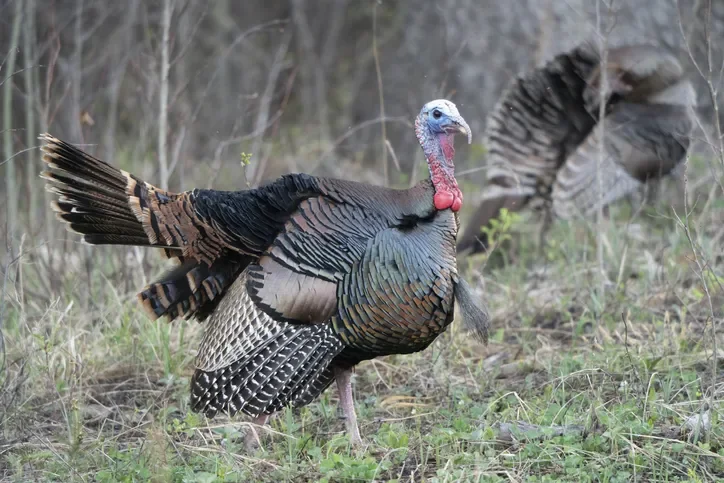
A turkey’s head can change color based on excitement level and body temperature. This effect is caused by expanding and contracting blood vessels. When a turkey’s head appears pale blue, this can signal that the bird is relaxed, while dark red can signal stress or aggression. A turkey’s head may also appear gray, which typically indicates a more neutral state.​
[/td]​
[td]
[td][/td]​
[/td]​
[td]
image source: iStock.com/bobloblaw​
[/td]​
[td width="100%"]
mail.webp​
[/td]​
[td]
[td]
How would you rate today’s newsletter?​
[/td]​
[/td]​
[/td]​
 
Fact of the DayBirds
Ravens like to play games.
By Nicole Villeneuve
Ravens may be known for their intelligence, but they also know how to have fun. These clever birds have been observed carrying sticks high into the air, dropping them, then swooping down to catch them before they hit the ground. They’ve also been observed mischievously letting the sticks fall onto other birds.

This form of play is contagious: While ravens will do these things on their own, once one starts playing, others are likely to join in. Play is more common among young ravens, but adults do it too, and research suggests it's a way for ravens to explore their surroundings, build social skills, and practice the aerial maneuvers that help them navigate the world.
Do animals get bored like we do?
 

U.S. History​

[td]

We Tried Cooking Some of the Dishes From the First Thanksgiving​

​
[/td]​
[td]
​
[/td]​
While it’s difficult to know what exactly was eaten at the first Thanksgiving, it’s possible to piece together a menu based on various written accounts and the crops that were available around Plymouth at the time. With that in mind, we set out to recreate some of the dishes that were likely served at the first Thanksgiving feast.
mail.webp
 

Users who are viewing this thread

Back
Top