Welcome!

By registering with us, you'll be able to discuss, share and private message with other members of our community.

SignUp Now!

Our Health

[td]
In 2013, a team of doctors in the Netherlands stopped a clinical trial early.

The results were so lopsided that they felt they couldn't keep giving patients the standard treatment.

The patients had recurrent C. difficile, a gut infection that keeps coming back, usually after antibiotics have wiped out the normal gut community.

The standard treatment was more antibiotics. Some patients in the trial got exactly that: a powerful antibiotic called vancomycin.

Others got something that sounded almost absurd at the time. The doctors gave them a healthy microbial community, transplanted from the gut of a healthy donor.

The antibiotic cured 31% of patients.

The antibiotic plus a bowel cleanse cured 23%.

The healthy microbial community cured 94%.

Think about what that means. This was a gut infection, the one situation where killing bacteria seems most obviously right.

Trying to kill the problem failed most of the time. Rebuilding the ecosystem worked almost every time.

That trial became a turning point in how medicine thinks about the gut. The goal shifted from wiping out bad bacteria to restoring a healthy, diverse community that keeps the bad ones in check on its own.

Now move two feet up the very same digestive tract, to your mouth.

The food you chew travels about 10 inches down your esophagus to your stomach. Your mouth sits roughly two feet above your colon, where most of your gut bacteria live.

It's one continuous tube. And your mouth is home to its own microbial ecosystem, governed by exactly the same principle.

Yet oral care is still stuck in the old-school antimicrobial paradigm, the one gut medicine left behind.

When gums bleed, breath turns sour or another cavity shows up, the answer is almost always some version of more killing: an antiseptic rinse, an antibacterial toothpaste, a more aggressive cleaning routine.

And just like recurrent C. difficile, the problems tend to come back, because killing bacteria does nothing to restore the community that was keeping them in check.

The principle that changed gut medicine applies two feet higher up, too. When you build the community up, it protects you.

On Wednesday, November 18th at 4:30 PM PT / 7:30 PM ET, Dr. Haroldo Magarinos will show you how to do that in a free live training.​
[/td]​
[td][/td]​
 
[td]
[td]
[td]
Hey there,


My good friend Dr. Josh just shared something incredible with me...


He’s been a leading naturopathic physician for 25+ years, and his main job is to help keep his patients' joints moving freely.


Today, I'm going to share with you the proven method that his patients have been using to get (and stay) pain-free...


And let you in on this "trade secret" that will help your joints feel like they just got an oil change


Read Now: 6 Anti-Inflammatory Foods for Your Knees, Hips, & Back​
[/td]​
[/td]​
[/td]​
[td]
[td]
[td]
Yours in good health,

Andrew Peloquin

Editor-in-chief, The Longevity Journal​
[/td]​
[/td]​
[/td]​
 
[td]
[td]
Dear Jimi,


I've got an interesting question for you today :)


What do 4,644 clinical studies around inflammation and your forgetful moments have in common?


Answer: Your memory.


80% of memory problems may be caused by inflammation in the brain, called neuro-inflammation.


And this could be the root cause of your memory problems.


If you're feeling like you just don't think as quickly as you used to, or are tired of your loved ones telling you that you already told them that...


Or if forgetting someone's name is your specialty, then you need to see this FREE TRAINING.


Julia Lundstrom, a Neuroscience and Brain Health Educator, has helped over 113,000 people make measurable improvements in their memories.


She put this special training together for you, where you'll learn if neuro-inflammation is the root cause of your memory problems.


And best of all, she'll show you how to reduce neuro-inflammation in your brain to regain your sharp memory.


You'll learn about the memory hormone called pregnenolone and how it is the key to regaining your memory.


You'll also:

  • See if you have inflammation in your brain
  • Investigate if it's what is causing your memory loss
  • Gain the confidence to make the necessary lifestyle changes today to fight neuro-inflammation
  • Prevent memory loss by boosting your pregnenolone – your memory hormone
  • Undo any past damage to your brain from inflammation
  • Prepare an action plan, based on your current lifestyle, one that fits your needs to implement the steps
Stop putting a band-aid on your memory issues.


Get to the root cause and fix your memory for good.


Watch this training now​
[/td]​
[/td]​
 
[td]
Love​
​
[td]
Whenever you have a choice between being right or being kind, be kind. No exceptions.​
[/td]​
[td]
~
[/td]​
[td]
Kevin Kelly​
[/td]​
[/td]
 
[td width="650px"]
Hi Jimi,

Over the past decade, something striking has happened in spine care.

A published analysis found:

A 460% increase in long spinal fusion surgeries among adults aged 65–84.
​
​
[td width="650px"]
That's not a small shift.

Now, this isn't about criticizing surgery.

There are cases where it's necessary.

But when you see a number like that...

You have to ask:
What's driving it?

Because degeneration itself hasn't suddenly changed.

Human anatomy hasn't changed.

What has changed is the environment your spine lives in.

Less movement.

More sitting.

More repetitive positioning.

Less restoration of function.

Over time, this creates a predictable pattern:

  • Loss of mobilityLoss of structural integrityLoss of load tolerance
And eventually...

the body becomes less capable of adapting and compensating.

Which brings us back to one of the most important questions in healthy aging:

Why do some people maintain their function for decades... while others steadily lose it?

Most people assume it's simply a matter of age.

But when you look closely, a different pattern begins to emerge.

The people who maintain their function aren't just treating symptoms as they appear.

They're addressing the system that created those symptoms in the first place.
And that changes everything.

That's exactly what we'll be discussing live on:
Thursday at 4:30 PM Pacific (7:30 PM Eastern)
Show Me What I've Been Missing

We'll cover:

  • Why some people maintain function for decades while others steadily lose itThe main drivers of spinal degeneration (beyond what you've been told)The structures that determine whether your spine holds up—or breaks downThe capacity that protects long-term function and independence
This is about understanding your trajectory.

And learning how to change it.

I want to understand this system
https://summitac.emlnk1.com/lt.php?...5XGI3gKIO38MQRLUOFu3XNziN~2le1AXHDDMnGZ65z~yK

To your health,​
​
[/td]
[/td]
 
[td width="600px"]
mail.webp​
​
[td width="560px"]
Hi Jimi,

What is the ideal diet for cancer patients, and why does the answer matter whether you are a vegan or a carnivore?

Dr. Joel Fuhrman answers that question in Episode 8: Personal Cancer Care, streaming live now.
​
​
[/td]
[/td]
 
Home for the Holidays is tomorrow at 1pm ET.

Register for Tomorrow

If you’ve been reading along this month and haven’t registered yet, this is the moment.

US Thanksgiving is nine days away. After that it’s six weeks of full calendars, short nights, and the people who knew you first.

Here’s what 90 minutes tomorrow gives you for all of it:

  • Something to do in the three seconds after the comment. Small, physical, and invisible to everyone else at the table.
  • A way to tell which reaction is yours. The snap, the exit, going along, or going blank. What helps one doesn’t help the others.
  • A plan for when you can step away. The bathroom, a walk, five minutes in the car.
  • A wind-down for the night. For when the day is over and your body is still running.
  • More room. You’ll see what’s draining you this time of year, and where you can get some of it back.
  • Company. Small groups with people heading into the same season.
  • The Anima Holiday Survival Guide. It arrives tomorrow with the session and covers sleep, the calendar, what goes into your body, and the people. It’s yours to keep.
We practice all of it live. That way it’s in your body before the first dinner, and you aren’t trying to remember a tip mid-conversation.

Register for Tomorrow

Here’s what people have said after these sessions:

“Yes — saying “fine,” over-explaining, becoming whatever someone else wanted me to be. Wow! Spot on!”

“For all the work I’ve done over so many years, I feel hopeful that this group will guide me to move from protection mode toward release, relaxation, and joyful living. I feel so much possibility.”

“The session yesterday was enlightening and powerful! I felt heard, seen and validated.”
— Michelle

“Please consider doing this weekly!”

“Michael, you express complex ideas in inviting, graspable street language: I feel the impact in every session.”
— William Sebrans

A few things people ask:

“I can’t make 1pm.”
Register anyway. Everyone registered gets the recording and the guide.

“I’m new to this.” There’s nothing to prepare, and no experience with this work is required.

“I’d rather not talk in a group.” Camera on or off, both are fine. Listening counts as taking part.

“What does it cost?” Pay-what-you-can, starting at $10.

ANIMA EXPERIENCE SESSION TOMORROW:
Home for the Holidays
– Why the holidays drain your resilience and set off old reactions so fast, and what to do when they do. Practices you can use at the table without anyone noticing, a wind-down for the night, plus live Q&A and real connection.

Wednesday, November 18, 2026 at 10am PT / 1pm ET / 7pm CET.

Register for Tomorrow

Talk soon,
 

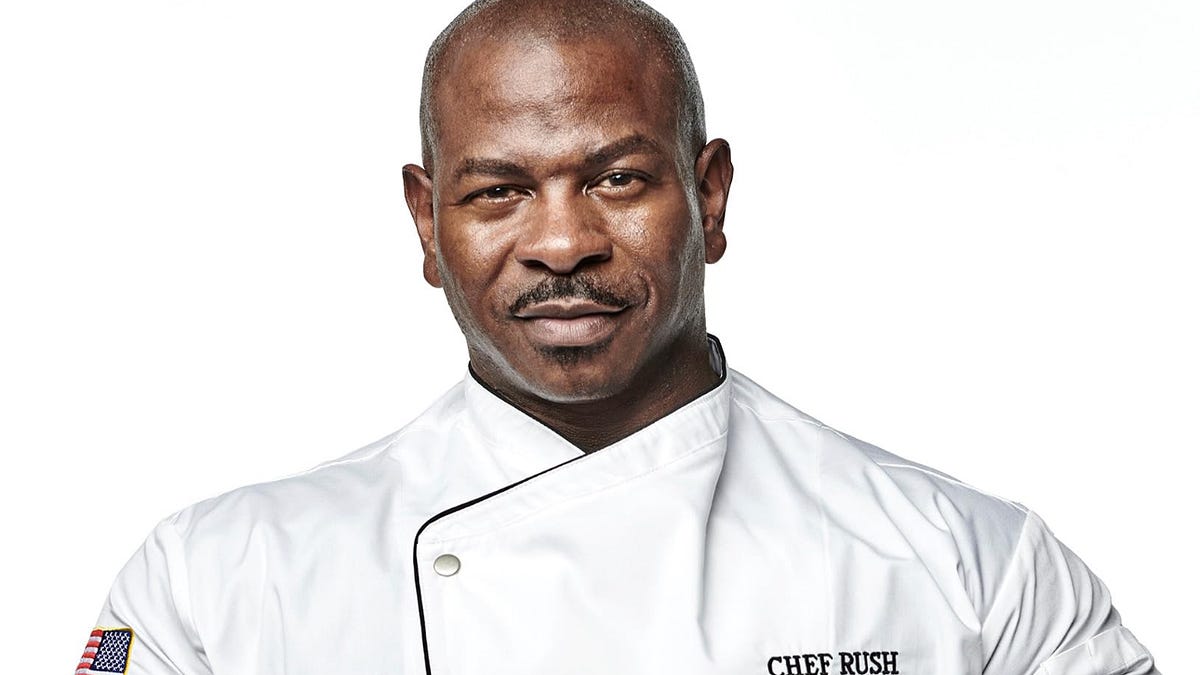
The MAHA Profile: For Chef André Rush, There Is No Politics in a Plate of Healthy Food—Nor in Chronic Disease​

The former White House chef lost 20,000 followers after cooking with Secretary Kennedy on “The Real Food Show.” He answers his critics with a call for every parent to cook with their family again.​


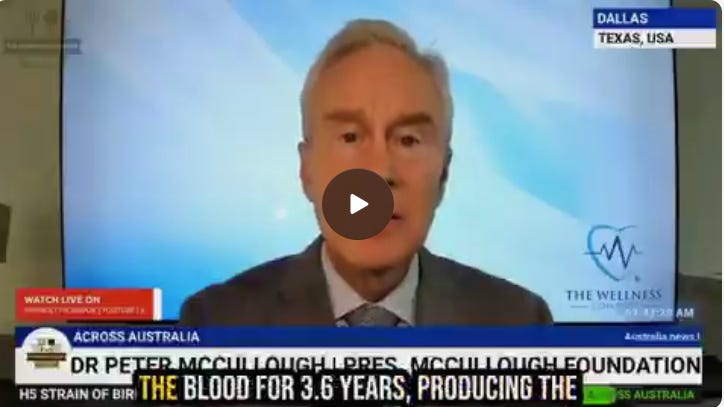
URGENT WARNING: Spike Protein Still in a Patient's Blood Nearly FOUR YEARS After the Shot. This Isn't Temporary​

Documented bloodwork shows the spike protein still being produced 3.6 years later, with clots and heart damage now. They want the same platform in the flu shot.​

 
Alzheimer's and Heart Disease Can Overlap

By Chauncey Crandall, M.D.

Alzheimer’s disease is the most common type of dementia, constituting 60 percent to 80 percent of cases of that mind-altering condition. Dementia is defined as a gradual loss of memory and other cognitive abilities, so it’s thought of as primarily affecting the brain.

Though research has focused on how heart disease may increase the risk of Alzheimer’s, the two can overlap in ways that suggest dementia may, in fact, put a person at greater risk for cardiovascular problems as well.

Atherosclerosis — the buildup of fatty deposits in the arteries that causes not only heart disease but can also lead to a stroke — has long been seen as separate from Alzheimer’s, which is usually blamed on the buildup of amyloid proteins called plaques and tangles in the brain. But it’s now believed those protein deposits may also play a role in decreasing the blood supply to the brain.

Special: Could Your Daily Habits Be Raising Your Alzheimer's Risk?

And like the heart, the brain is a huge consumer of oxygen.

It’s now understood that people with congestive heart failure are at increased risk of developing Alzheimer’s disease. Though the reason is not fully known, it has been suggested that congestive heart failure — which signifies a weakened heart — results in a deficit of oxygenated blood going to the brain.

A study published in the Journal of the American College of Cardiology compared 22 patients with Alzheimer’s disease and 35 patients without it to analyze stiffness in their left ventricle, one of the lower chambers of the heart. The researchers discovered that the people with Alzheimer’s disease were more likely to have stiffness in their left ventricle — the heart’s primary pumping station.

This thickness resulted in the same kinds of amyloid plaques that build up in the brains of people suffering Alzheimer’s disease. If the ventricle becomes too stiff to pump blood properly, it causes higher risk of heart attack and stroke as well.

People diagnosed with Alzheimer’s should be sure that their doctor is aware of that diagnosis so that they can be monitored for possible stiffening of their left ventricle, which can lead to potential heart failure in the future.
 

Users who are viewing this thread

  • Back
    Top