Welcome!

By registering with us, you'll be able to discuss, share and private message with other members of our community.

SignUp Now!

Our Health

[td width="550px"]

[td]
Forwarded this email? Subscribe here for more
[/td]​
[td]
​
[/td]​

With the Wind with Dr. Paul — Show 213: Pediatric Perspectives: Root Causes of Eczema, Seizures & Summer Health with Ben Edwards, M.D.​

This Wednesday, October 28, our 213th episode of With the Wind with Dr. Paul will be live on DoctorsAndScience.com/Shows at 11:30 a.m. PT.​

Oct 28
[td]

READ IN APP
​
[/td]
[td width="1456px"]
Dr. Paul Thomas and Ben Edwards, M.D. on the Show 213 Pediatric Perspectives cover graphic​
[/td]​
On this week’s episode of With the Wind, Dr. Paul is joined by Ben Edwards, M.D., family physician and founder of Veritas Clinic and Veritas Wellness in Lubbock, Texas.

Dr. Edwards shares how a mentor’s challenge — reviewing his ten toughest, most treatment-resistant patients — changed the course of his career, moving him from conventional symptom management toward true root-cause medicine. He and Dr. Paul dig into what’s really behind so much of the eczema and seizures showing up in kids today, from gut health and hidden food sensitivities to toxin exposure and inflammation, and close with practical, real-food tips for a healthy summer.

In this episode, Ben Edwards, M.D. discusses:

  • Why he left conventional, pharmaceutical-only symptom management for root-cause medicine
  • The gut-skin connection behind so much childhood eczema
  • What he’s finding when he looks at seizures through the lens of toxicity and inflammation
  • How diet affects the skin’s ability to handle sun exposure
  • What to look for — and avoid — in sunscreen
  • Practical hydration and cooking-oil tips for summer
Visit DoctorsAndScience.com/Shows to watch the episode live or catch the replay.

Watch the highlights​


The Mentor's Challenge​

How Dr. Robby Mitchell (Dr. Fitt) challenged Dr. Edwards to send his ten sickest, most treatment-resistant patients — and how their recovery changed everything.

c-29b0-49dd-b72c-320ada33b447%252Ftranscoded-00001.webp

Eczema: A Gut Problem​

Why eczema is a gut issue, not just a skin issue — covering the skin-gut connection, leaky gut, parasites, candida, and the "house fire" analogy for treating root cause vs. symptoms.

a-11a5-4aec-930d-66357c5eb76c%252Ftranscoded-00001.webp

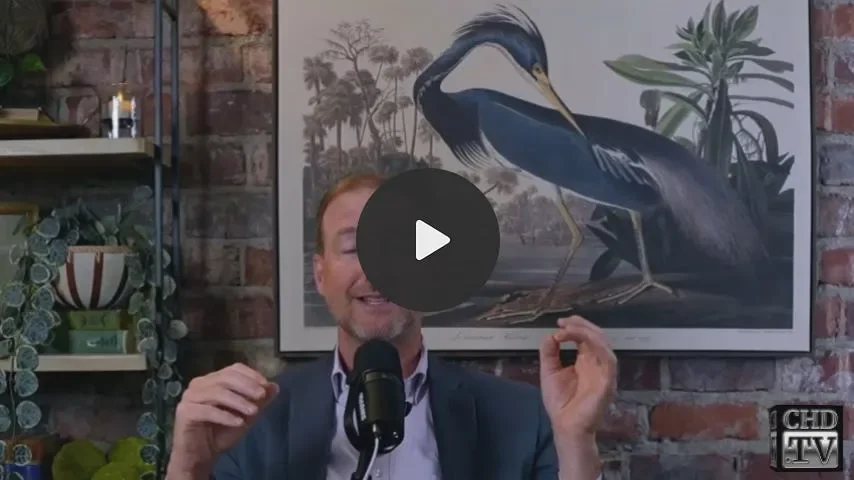
“Our skin’s our largest organ. What you put on the skin’s gonna get into the body almost always. So if you wouldn’t eat it, you better be careful about putting it on the skin.”

— Ben Edwards, M.D.
[/td]​
 

Seizures, Toxicity & Inflammation​

What Dr. Edwards is finding when he looks at seizures through the lens of toxicity — spike protein, glyphosate, heavy metals, and the detoxification approach.

3-c91e-49f4-8870-31a7407bd7bc%252Ftranscoded-00001.webp

Summer Sun, Sunscreen & Hydration​

Practical tips on smart sun exposure, the dangers of conventional sunscreens, why diet affects sun tolerance, hydration with electrolytes and "eating your water," and healthy cooking oils.

reqid=7143f3b7-75af-585d-1cc2-980026012600&sig=cJb.webp

Screen-Free Family Time​

Why getting outside, moving, and having device-free conversations with your kids matters — especially in summer when there's no homework excuse.

=7143f3b7-75af-585d-1cc2-980026012600&sig=Jjg6JFXN.webp

Visit​


Don’t miss this insightful episode!
Tune in this Wednesday at 11:30 a.m. PT on DoctorsAndScience.com/Shows
 
Hello friends,

Three stories caught my attention this week, and they each remind me why context matters so much in medicine. A medication can raise a safety concern without being the wrong choice for every patient. A person can have real symptoms even when routine tests do not explain them. And what looks like ordinary forgetfulness can sometimes be a sign that it is time to get checked.
mail
Let’s begin with cefepime, a common antibiotic used in hospitals to treat serious bacterial infections.

A study published in JAMA Network Open reviewed 110 clinical trials involving 22,608 patients. Researchers found a 94.4% probability that the odds of death from any cause were higher among patients who received cefepime than among those who received other antibiotics in the same class.

That is a finding worth paying attention to. But it is also a finding that needs to be understood in context.

Cefepime is not necessarily the first antibiotic you use when someone is only moderately ill. It is often brought in when someone is quite sick and you are concerned about a serious infection. So one of the questions I would ask is how well the researchers accounted for the severity of the patients’ illnesses.

Think about it this way. If someone is in the hospital with a serious infection and the initial treatment is not working, the medical team may need a more powerful antibiotic. Those patients may already be at a higher risk of dying because of the infection and how sick they are. That is why we have to be careful about interpreting the results as proof that the medication itself caused those deaths.

At the same time, cefepime does have potential toxic effects, including effects on the nervous system. The challenge is getting the dose right. You want enough medication to treat the bacteria, but you do not want to cause unnecessary harm. That is a delicate balance, especially in someone who is already seriously ill.

If you are caring for someone in the hospital, ask what a medication is being used for, what the potential risks are, and why the medical team chose it over another option. Those are reasonable questions, and understanding the answers can help you make sense of the treatment plan.
mail
Now, let’s move to something that has been frustrating for many people with long COVID: the brain fog, memory problems, fatigue, and lack of motivation that can linger long after the initial infection.

For a long time, people have described these symptoms without having a clear biological explanation that could be measured. A new study from researchers at the University of Toronto, reported by Fortune, offers another clue.

Researchers used PET imaging to study 24 people with long COVID and 24 healthy people. They measured a protein called VMAT2, which is found on the nerve terminals that release dopamine. Dopamine plays a role in brain functions such as motivation, movement, and memory.

The researchers found that VMAT2 levels were lower in the striatum, a brain region involved in those functions. The reductions ranged from 16% in an area linked to planning to 20% in an area associated with motivation and apathy. The changes also appeared to track with particular symptoms, including memory problems, slowed movement, and reduced motivation.

I think this is a very interesting finding because it gives us a potential biological marker. In other words, researchers are identifying a measurable change that may help explain some of what people with long COVID are experiencing.

The important message here is that just because routine tests are not picking something up does not mean nothing is wrong. People may be experiencing genuine changes that we have not yet learned how to identify through standard testing. Findings like these can help us better understand what patients have been telling us.

But we have to keep the size of the study in mind. Twenty-four patients is a small group, and we cannot assume that the same findings explain every case of long COVID. More research is needed to see how consistent these changes are and what they mean for treatment.
 
mail

Captain Chesley "Sully" Sullenberger speaks during a House Committee on Transportation and Infrastructure hearing on the status of the Boeing 737 MAX on Capitol Hill in Washington, Wednesday, June 19, 2019. Credit: AP Photo Andrew Harnik​

The third story is about Sully Sullenberger, the pilot who safely landed a commercial plane on the Hudson River in 2009. He has now spoken publicly about his early-stage Alzheimer’s diagnosis.

Sully, 75, described first noticing that he was forgetting names and events, things that can be easy to dismiss as minor or simply part of getting older. His wife, Lorrie, has made an important point about why they decided to speak publicly: Alzheimer’s is a disease, not a character flaw. We need to talk about it more openly.

My heart goes out to Sully and his family. His experience is also a reminder that Alzheimer’s can affect people who are accomplished, highly capable, and used to performing at an extraordinary level.

So how do you know when forgetfulness is normal aging and when it deserves attention?

We all have those moments when we walk into a room and forget why we went there. Sometimes you forget a name, but it comes back to you a few minutes later. That is very different from a pattern of memory problems that keeps happening.

What concerns me is when someone repeatedly forgets the same things, struggles with tasks they have managed for years, or seems to be losing the ability to function as they normally would. When the problems are persistent, getting worse, or interfering with everyday life, that is when you need to get some help. Do not simply assume it is normal aging.

There is also a question people often ask: If you exercise, stay mentally active, eat well, and keep challenging your brain, can you prevent Alzheimer’s?

This is still an area of active research. What we know is that taking care of your overall health can help maintain brain function. Exercise, a healthy diet, good blood pressure control, preventing or managing diabetes, getting enough sleep, socializing, and keeping your brain active are all important parts of that picture. Having a sense of purpose matters, too.

But good habits are not a guarantee. Genetics and other biological factors still play a role. Someone can do many of the right things and still develop Alzheimer’s. Those habits may help preserve function or extend the time before problems become apparent, but they cannot eliminate the risk.

When I look at all three stories together, I come back to the same idea. You need to understand the full picture. Do not assume a concerning study tells you to stop medication. Do not dismiss symptoms just because routine tests are normal. And do not brush off ongoing memory problems as simply getting older.

Ask questions, pay attention to changes, and get medical guidance when something does not seem right. That is how we make better decisions with the information we have.
 

The part of your cancer journey no one talks about enough​

Hi Jimi,


I want to ask you something.


With everything you've been doing to take care of your physical health, how much attention have you been able to give to what you're going through emotionally?


I know you may have spent years learning about your health, working with doctors, changing how you eat, trying different approaches, and doing everything you can to support your body.


And I respect that deeply.


But here's something I've noticed through more than 20 years exploring health and healing.


Someone can be doing an incredible amount for their physical health and still be carrying a tremendous amount of fear, stress, grief, and uncertainty.


Maybe it's the worry before a scan. Maybe it's the thought that suddenly appears during an otherwise beautiful day. Or maybe you're simply tired of feeling like you always have to be strong.


And I keep coming back to one question:


Who's taking care of YOU through all of this?


That's why I'm hosting a free masterclass called Beyond the Fear: How to Find Peace, Reclaim Your Joy, and Live More Fully While Navigating Cancer.


And I'm excited to share that I'll be joined by a special guest, Jackie Zofkie, a stage III breast cancer survivor and holistic cancer coach.


Jackie will share her personal journey, including the integrative approaches she explored and what helped her find greater peace, confidence, and purpose while navigating cancer.


Together, we'll explore why fear can keep returning even when you're doing everything you can to stay positive, what your nervous system has to do with it, and how deeper emotional patterns can begin to change.


I'd love for you to join us on Friday, October 30, at 11 AM Eastern.


You can save your place for Beyond the Fear here.


Because your emotional wellbeing matters, too. And you deserve to experience more than just getting through the day.
With love and gratitude,
 
Ever noticed that cuts, sore muscles, and gym recovery just take longer than they used to after 35? It's not your imagination. Something measurable changes inside your cells, and once you understand what it is, you can actually work with it instead of against it. We broke down the whole mechanism here: Why your tissues heal slower after 35, and what actually changes inside the cell

On a related note, if kombucha, sauerkraut, aged cheese, or even avocado leave you with headaches, flushing, or a racing heart, the problem isn't the "healthy" label on the food. It could be histamine, and the enzyme that's supposed to handle it. Here's how to tell: Histamine Intolerance Symptoms and Diet: Why Healthy Fermented Foods May Be Making You Sick

And one more thing worth checking before your next checkup. Standard cholesterol panels can look perfectly fine while something risky quietly builds up in your arteries. There's a single number, ApoB, that reveals what LDL alone misses: ApoB vs LDL: Why Apolipoprotein B Is the True Marker of Heart Attack Risk

Which of these three hits closest to home for you? Hit reply and tell us.


Health Revolution Insider Team
 
Early Symptoms of Kidney Disease
Latest Guide

Early Symptoms of Kidney Disease​

Kidney disease can develop for years without obvious pain, making its early warning signs incredibly easy to dismiss. This article walks you through what your body might already be trying to tell you.

​
[/td]
 
[td width="100%"]
[td width="100%"]
mail
​
[/td]​
[/td]
[td width="100%"]
[td width="100%"]
​
​
Hi Jimi,


How many times have you said "yes" when you actually meant "no"? Or offered to help even though you were short on time and energy yourself? Or braved saying "no" only to be hit by a wave of guilt?


So often we do things we don't really want to do because we think it's kind. That it's just in our nature to be helpful. But this isn't always kindness. People-pleasing is often a defensive pattern your nervous system learned in childhood to help keep you safe and connected. And it’s something that can be changed.


That’s exactly what we’ll be exploring in a free live webinar on Monday, November 2nd at 4:30pm GMT. Therapeutic Coaching® co-creator Anna Duschinsky and I will delve into the childhood roots of people pleasing, why it so often draws us into toxic relationships, and how to start putting yourself first without the guilt.
[/td]​
[/td]
[td width="100%"]
​
[/td]​
[/td]
[td width="100%"]
Can't join us live? Register anyway and we'll share a limited-time replay once the session ends.
​
[/td]
 
[td width="550px"]

[td]
​
[/td]​

The Two Truths That Changed Everything We Thought We Knew About Cancer​

We lost seven family members to this disease. Then we discovered what the medical establishment has been ignoring for nearly a century.​


[/td]​
 
[td]
The top brain herbs are

  • Turmeric.
  • Ginger.
  • Medicinal mushrooms.
  • Green tea.
  • Adaptogenic herbs.
Are you using them in a way that actually works?

Inside The Chronic Inflammation Summit, leading experts are giving their expertise on

  • Which herbs have the strongest evidence for calming inflammatory pathways
  • How specific plant compounds influence immune signaling
  • What most people misunderstand about dosage and bioavailability
  • Why gut health determines whether these compounds help or do nothing
  • How to combine functional foods and herbs for real synergistic effects
This isn't surface-level wellness advice.

It's a deep dive into how food and botanicals communicate with your cells.​
[/td]​
[td]
When you register, you'll also receive instant access to bonus gifts such as The Inflammation-Crushing Smoothie eGuide, Microbiome repair insights, and detox and fasting tactics!​
[/td]​
[td]
With aligned purpose,

Bobby Cardwell​
[/td]​
 

Users who are viewing this thread

Back
Top