Welcome!

By registering with us, you'll be able to discuss, share and private message with other members of our community.

SignUp Now!

Our Health

Hi Jimi,
There are eight B vitamins, and they’re important to just about every system in your body.
B vitamins may help protect against type 2 diabetes, heart disease, cancer, and birth defects. And they’re important for a healthy pregnancy, hormone production, and for your hair, skin, and nails.
Some people think you need to eat animal products to meet your B vitamin needs. But do you really? And should you consider any B vitamin supplements?
Get the full B vitamin story
Yours for getting the nutrients you need,
Ocean Robbins
P.S. While all of the B vitamins are in whole foods, there are a few that some people may struggle to get enough of. Fortunately, when you know the facts, you don’t need to be one of them. Get the whole story here.
 
[td width="600px"]
mail
​
[td width="560px"]
​
[td width="560px"]
Hi Jimi,

Watch Episode 4 before it disappears tomorrow at 9AM Eastern, you have to see this...​
​
[/td]
[/td]
[/td]
 
Quick one today — two things worth five minutes of your time.


First: that moment when you walk into the kitchen and completely blank on why you're there. Turns out it's not you getting forgetful. Psychologists have a name for it, the doorway effect, and the research behind it explains something much bigger about how your brain decides what to keep and what to drop.


We dug into the Notre Dame studies (and the newer research that pushes back on them) in our latest piece.


Second: if you've ever assumed "annual bloodwork" is just something responsible adults do every year, the evidence tells a more complicated story. We broke down what the CDC, USPSTF, and Mayo Clinic actually recommend by age and risk factor, and when a full panel is worth asking for versus when it's just routine for routine's sake.


Curious which one surprised you more. Hit reply and let us know, or drop a comment under either article if you've got a doorway-effect story of your own (we all have one).


If either piece is useful, forward it to someone who'd get something out of it.
 
Is coffee good for you or not?

You'll discover the eye-opening answers right now in my research-based article for you...

The 6 SURPRISING Health Benefits of Coffee (and 5 big coffee myths BUSTED)

If you appreciate this article, Jimi, please share a comment about it at the bottom of the page.

Because in it, you're about to discover:

* The widespread chronic disease that coffee may be particularly effective against

* Why coffee may be a wise choice if you are worried about Alzheimer's and other brain issues

* How coffee can naturally help your body detox

* 5 potential downsides to coffee (the last one, unfortunately, far too common... but easy to overcome)

* My personal favorite -- and highly recommended -- type of coffee (and why)

* And much more!

Head here now for the new 6 Surprising Benefits of Coffee article
 
[td]
Hi Jimi,


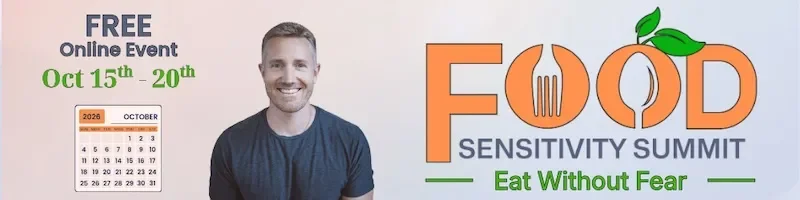
The 2026 Food Sensitivity Summit is now open for registration. This no-cost event will air from October 15 until October 20, 2026, featuring 15 respected experts in the fields of immunology, functional medicine, integrative health, Ayurveda, and more!​
[/td]​
[td]
[td]
mail?url=https%3A%2F%2Fez510.files.keapfile.webp​
[/td]​
[/td]​
[td]
Infections and environmental toxins are two of the most overlooked root causes of food sensitivities. And most people are treating the symptoms while the real drivers remain completely ignored.


When the gut lining is exposed to chronic irritation from microbes or environmental toxins, the immune system shifts into defense mode. Over time, that defensive state can disrupt your immune system’s ability to determine what is friend and what is foe. And that’s when food reactions begin.


Environmental toxins can do something similar. Studies have found that mold mycotoxins and heavy metals can alter gut barrier integrity and immune signaling. (Ghosh et al., 2020)


When the lining of your gut is chronically inflamed, food lights a fire and your body becomes collateral damage.


This is why many people notice their food sensitivities begin after:

  • A stomach bug that never fully resolved
  • Food poisoning or travelers diarrhea
  • Mold exposure
  • A stressful season or head injury
  • Living in a water damaged home
The immune system gets conditioned to always being in threat mode. And that adaptation can show up as reactions to foods you used to tolerate just fine. This is also why elimination alone often falls short.


You can remove gluten, dairy, eggs, and soy. But if infections or toxins are still driving inflammation, new foods may keep becoming a problem.


That upstream layer is exactly what the Food Sensitivity Summit addresses.


Here’s a taste of what you’ll discover at the summit:

  • How infections can weaken your gut barrier and disrupt immune regulation
  • The role parasites play in food sensitivities, and why conventional testing misses them
  • Which tests can uncover microbial or toxin drivers
  • Which environmental exposures affect immune tolerance
  • Why you must address the nervous system if you want to truly recover
  • How to safely expand your food list once the deeper issue is addressed
[/td]​
 
As you may know, Americans often pay more for the same pill than people in other rich countries.


We all know that story far too well. And for years, we’ve been told why it’s so hard to change.


Now Washington is testing a different approach...


On October 2, CMS published the final Global Benchmark for Efficient Drug Pricing rule… GLOBE, if you like acronyms.


Here’s what it means: For certain drugs covered by Original Medicare Part B, the government will use prices in other wealthy countries to help calculate rebates owed by drugmakers. These are generally treatments given in a doctor’s office or clinic, including some autoimmune therapies.


The question is simple... If other countries pay less for the same treatment, why should Americans keep paying more?


The test will cover selected areas representing about one in four people whose primary coverage is Original Medicare. It begins January 1, 2027, and runs through March 31, 2032. Some patients could see lower out-of-pocket costs starting April 1, 2027.


The rule itself takes effect November 30, 2026.


But before anyone declares victory, read the fine print...


CMS plans to waive participation requirements for manufacturers taking part in a separate Medicaid pricing model called GENEROUS.


Under the rule’s assumptions, that could leave just four manufacturers participating in GLOBE.


That makes the reach of this rule just as important as the promise behind it.


CMS says the goal is to lower costs while protecting quality of care. That’s a goal worth watching. It’s also a claim that needs to be measured against what patients actually pay.


Because families don’t pay their medical bills with press releases.


They pay with money that also has to cover groceries, housing, and everything else.


On paper, GLOBE promises a way to bring those costs down.


But buried in the fine print is a key question: Which drugmakers will actually have to take part?


The answer could shape how much relief patients see...

Read the fine print behind Washington’s new drug pricing plan.
 
[td]
We're living in a paradoxical moment. Technology promises to elevate us, yet we're more disconnected from our bodies than ever.


Master Mingtong Gu, a Qigong master and author of Coming Home to Embodied Awakening, shares a radical insight: our humanity isn't defined by our thinking. Rather, it's defined by our capacity to feel, experience, and inhabit our bodies.


In a world hijacked by screens, data, and AI, Master Mingtong reveals why returning to your body is an act of resistance and reclamation. He's spent decades teaching thousands of people how to recover from "incurable" conditions and discover profound peace by reconnecting with their physical existence.


This conversation challenges everything you think you know about spirituality, health, and what it means to be truly human in the 2020s. If you've ever felt lost in your own mind, this episode is for you.


In this podcast, Master Mingtong Gu and I discuss:


  • How he recovered from "incurable" conditions like asthma and sclerosis through Qigong practice and a radical shift in mindset

  • That Qigong is the Chinese equivalent of yoga and has been practiced for thousands of years across multiple spiritual traditions

  • The three core questions Qigong asks: What is the nature of life? Who am I? What is the nature of my body?

  • How energy works as an infinitely present, infinitely connected, and infinitely creative force in your body and the universe

  • The critical difference between "I think, therefore I am" and "I feel, therefore I am," and why this distinction matters now more than ever

  • Why we're experiencing a slow-motion crisis of disconnection from our bodies and what that means for our humanity

  • The concept of embodied awakening: integrating mind-body connection as the foundation for true spiritual growth

  • How to practice present moment awareness by connecting directly with your body, not just your thoughts

  • The Chinese philosophical perspective on the inseparable nature of form and formlessness, physical and spiritual

  • A guided meditation practice that initiates you into reconnecting with your body as a living temple
[/td]​
[td]
Yours in health,​
[/td]​
 

DEATH CULT Canada: Doctors Relentlessly Railroaded a Cancer Patient Into “Assisted Suicide”​

A terminal man had to reject state-sponsored lethal injection six separate times. His refusal bought him ten months of life, and exposed the predatory reality of the MAiD regime.​

 
[td]
[td]
Dear Jimi,


A little something for your health this Saturday :)


Not one, but TWO catastrophic health crises are wrecking the lives of MILLIONS of Americans.


And not only are the numbers growing, one condition is FEEDING into the other...


Literally.


We're talking about food sensitivity and chronic inflammation – and the former is one of the leading causes of the latter.


You probably know which foods set you off.


Gluten. Dairy. Maybe eggs.


But that's not the problem...


The problem is that knowing your triggers and avoiding them hasn't made you better.


And that's because food sensitivity isn't REALLY a food problem.


It's a body problem.


Specifically, it's your gut-immune system losing the ability to tell "safe" food from "threat."


And when that happens, inflammation moves in permanently – spreading from your gut to your joints, your skin, your brain.


That's the loop nobody talks about:


Food sensitivity triggers inflammation. Inflammation damages your gut lining further...


A damaged gut reacts to more foods...


Which triggers chronic inflammation, the leading cause of chronic illnesses, like autoimmune conditions, diabetes, heart disease, even cancer.


But the good news is, you can break this cycle before it gets worse...


Go here to discover the proven solutions these 15 leading experts used to reverse food sensitivities and avoid becoming another person who waited too long.​
[/td]​
[/td]​
 
[td width="560px"]
Hi Jimi,

In Episode 5 of the Dental Health Docu-Class, now live for 24 hours, Katie To, DDS, dives deep into why old dental work can still be a serious health risk.

A root canal from years ago.

Gums that bleed a little.

A tooth that was removed and “healed.”

Dental materials your body never agreed with.

Inside Episode 5:

Overcoming Dental Problems Holistically
​
[/td]​
 
[td width="580px"]
Hi Jimi,Today, you get free access to (3) gut repair tools:Download These 23 Superfoods to Heal Your Gut & Eliminate InflammationThis guide shows you how to use these foods to repair your gut lining and clear away harmful bacteriaGet Your Gut-Friendly Soup Cookbook TodayDid you know that eating the same simple soup for a few days can actually reduce digestive strain? The recipes found in this gift will help your digestive system to rest by providing pre-broken-down nutrients, high hydration, and consistent, easily digestible ingredients.
Discover the Stress-Food ConnectionFind out why food sensitivities don’t start with food. Discover the surprising events that prime your nervous system to perceive food as a threat. Plus, more importantly, you'll get powerful nervous system regulation strategies to help reduce the risk of unwanted food reactions.Have a great weekend,​
​
[/td]
 
With everyone claiming their diet is the fountain of youth, it's hard to separate real science from influencer noise. The truth is, Keto, Paleo, and Carnivore each offer real benefits - from fighting inflammation to boosting energy and supporting muscle health - but none of them is a one-size-fits-all answer. The key is knowing which one actually fits your body, goals, and lifestyle.


Read the full breakdown here → Keto, Paleo, or Carnivore? Which Diet Plan Is Best for Aging Like a Pro?


Age well and stay curious,
 

Users who are viewing this thread

Happy New Year!!!
christmas-tree
Back
Top